Beginner guide
What is an SPL Token? A Beginner's Guide to Solana Tokens
Learn what an SPL Token is, how it works, what information it contains, and how it differs from Ethereum's ERC-20 standard.
On this page
What is an SPL Token?
The standard used on Solana to create fungible and non-fungible tokens.
💡 Key takeaway
An SPL Token is Solana's standard for fungible tokens. Every token is defined by a single Mint account, while users own their balances through Token Accounts controlled by their wallets.
Most tokens on Solana, including memecoins, governance tokens, utility tokens, and many stablecoins, are SPL Tokens.
How does an SPL Token work?
Every SPL Token is represented by a unique Mint account stored on the Solana blockchain.
The Mint account stores the token's configuration, including the total supply, decimals, Mint Authority and Freeze Authority.
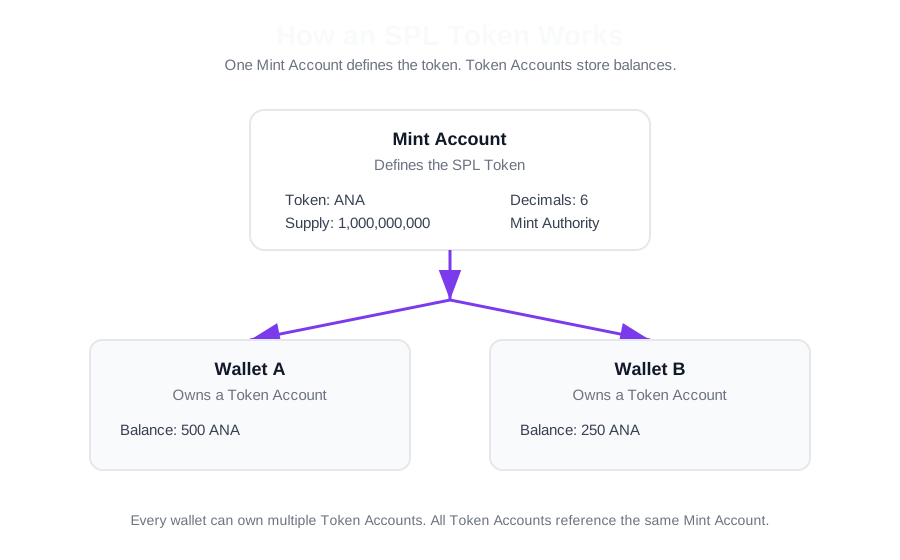
When users receive tokens, they do not receive the Mint account itself. Each wallet owns one or more Token Accounts that hold balances for a specific SPL Token.
What information is stored in the Mint account?
Every SPL Token is defined by a Mint account. This account stores the core properties of the token and is shared by every wallet that owns it.
| Field | Description |
|---|---|
| Token name | The human-readable name of the token |
| Symbol | The ticker displayed by wallets and exchanges |
| Decimals | The number of decimal places supported |
| Total supply | The total number of minted tokens |
| Mint Authority | Controls whether new tokens can be minted |
| Freeze Authority | Can freeze token accounts if enabled |
All of this information is stored on-chain and can be verified by anyone using blockchain explorers such as Solscan.
Where are SPL Tokens stored?
A common misconception is that SPL Tokens are stored directly inside a wallet. In reality, wallets do not store tokens.
ℹ️ Important
A wallet only controls Token Accounts. Each Token Account stores the balance of one SPL Token on the blockchain.
For example, if you own SOL, USDC and a memecoin, your wallet controls multiple Token Accounts. Each account stores the balance of a different token.
This architecture allows one wallet to hold thousands of different SPL Tokens while keeping every balance independent.
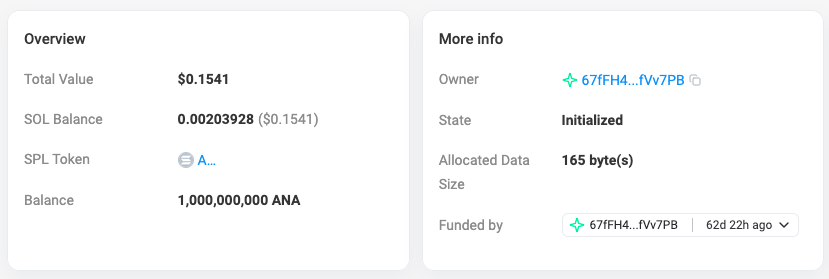
Blockchain explorers such as Solscan allow anyone to inspect Token Accounts and verify balances directly on-chain.
SPL Token vs ERC-20
SPL Tokens and ERC-20 tokens serve the same purpose: they define fungible tokens on their respective blockchains. However, they are built for different ecosystems and follow different technical standards.
| SPL Token | ERC-20 |
|---|---|
| Runs on Solana | Runs on Ethereum |
| Managed by the SPL Token Program | Managed by ERC-20 smart contracts |
| Very low transaction fees | Fees depend on Ethereum network congestion |
| Fast transaction finality | Speed depends on the Ethereum network or Layer 2 |
| Uses Token Accounts | Balances are managed by the ERC-20 contract |
If you're familiar with Ethereum, you can think of SPL Tokens as Solana's equivalent of ERC-20 tokens. They solve the same problem but are implemented differently.
Common misconceptions
Many beginners confuse how SPL Tokens work because the architecture is different from what they expect. Here are some of the most common misconceptions.
⚠️ Misconception #1
SPL Tokens are stored inside my wallet.
Wallets do not store tokens directly. They control Token Accounts, which store token balances on the blockchain.
⚠️ Misconception #2
Every SPL Token has its own smart contract.
Unlike Ethereum, most fungible tokens on Solana use the same SPL Token Program. Creating a new token usually does not require deploying a custom smart contract.
⚠️ Misconception #3
Revoking Mint Authority deletes the token.
Revoking Mint Authority only prevents new tokens from being minted. Existing tokens continue to exist and can still be transferred normally.
⚠️ Misconception #4
Every wallet can only have one Token Account.
A single wallet can control thousands of Token Accounts. Each Token Account holds the balance of one SPL Token.
Frequently Asked Questions
What is an SPL Token?
An SPL Token is the standard used to create fungible tokens on the Solana blockchain. It defines how wallets, exchanges and decentralized applications interact with tokens.
Are memecoins SPL Tokens?
Yes. Most memecoins launched on Solana are SPL Tokens created using the SPL Token Program.
What is the difference between a Mint account and a Token Account?
The Mint account defines the token itself, while Token Accounts store the balance owned by individual wallets.
Can I create an SPL Token without coding?
Yes. Platforms like Token Creator allow you to create an SPL Token directly from your wallet without writing any code.
Can an SPL Token have a fixed supply?
Yes. Once the initial supply has been minted, revoking the Mint Authority permanently prevents new tokens from being created.
Is an SPL Token the same as an ERC-20 token?
No. SPL Tokens run on Solana, while ERC-20 tokens run on Ethereum. They serve similar purposes but follow different technical standards.
Where can I verify an SPL Token?
You can verify an SPL Token using blockchain explorers such as Solscan or Solana Explorer. Information like the supply, decimals and authorities is publicly available on-chain.
What is the difference between SPL Token and Token2022?
Token2022 is an extension of the SPL Token standard that adds optional features such as transfer fees, metadata and confidential transfers while remaining compatible with the Solana ecosystem.
Ready to launch your own token?
Create an SPL token directly on Solana in less than a minute. No coding. No custody. Everything happens on-chain from your wallet.
Create your token →